Mayfly May

“If this isn’t a good day for blue wings, I don’t know what is,” said one local fishing geek to another downtown the other day. And it was – sullen sky, the air between earth and clouds heavy with the scent of moisture, the odd stray flake of snow falling straight down from a breathless overcast. There’s all sorts of theories as to why blue winged olive mayflies tend to hatch on cloudy days, but that’s all the really are – theories. The main thing to understand, from an angler’s point of view, is that they often do.

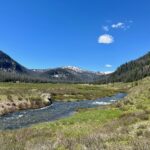
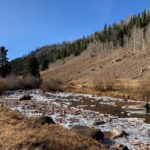
By early afternoon I’d ticked off a sufficient number of things on the to-do list to justify a quick trip to the river. Its always a good sign when you pull up, and birds are working the surface. This day, what looked like barn swallows were skimming and swooping low to the river, darting with incredible speed and dexterity, plucking something off of or near to the surface. While birds working the water is cause for optimism, it is by no means a guarantee of good fishing – just because they are feeding, doesn’t necessarily mean the fish are doing the same. I stood and watched the swallows for a while, then switched my attention to the water, searching for signs of fish rising in the bubble lines and back eddies, but the river’s surface remained dimple free, only the occasional blue wing floating by.

There has definitely been a change in the springtime hatch dynamic. In years past, it was nearly impossible to wade the river at this time and not feel the crunch of caddis cases under your boot, nor drive the canyon and not have your windshield smeared in caddis. Nature abhors a vacuum, and where there are now not as many caddis – once again, there are theories – the blue wings are stepping into the void, becoming more prolific by the year, the harbingers of spring on the river. Mayflies are the canaries in the coal mine when it comes to water quality, so to see them thrive is reassuring.

When in doubt, tie on a pheasant tail I thought. While not feeding on the surface, I discovered the fish were definitely active below it, and I managed to miss five takes in a row, all of them on the nymph, all slow and subtle, my timing either over eager or so late as to be laughable. I reeled in my line and checked to see if my hook was straightened – no excuse there. I reeled in to check if I didn’t have something stuck to the hook – no excuse there. I thought of some way to blame the fish – no excuse there.

Finally I got my mojo working, and proceeded to land three fish, and miss a couple more. As I reeled in for the last time, I did a quick count: three landed, seven missed, probably more than a guy like me deserves.

Share
Posted in Video Fishing Report | Tagged , , , , , , , , , , , , , , | 2 Comments

You take what the river gives you

“Are you sure you don’t want to put the boat in the garage overnight? It feels like rain, maybe snow.”

Not for the first time in my life, I should have listened to the Voice of Wisdom, or Wife, as she is more frequently known.

“Pfffft. What’s a little rain? It is a boat, after all.”
IMG_0387

Next morning I reminded myself of this exchange as I shoveled and swept several inches of heavy, wet snow from the boat, more falling from a leaden sky. Common sense would have dictated pushing the trailer into the garage and going back to bed, but over the years experience has taught me that sense and fishermen often share little in common. In my own defense, I would like to point out that had I not being getting paid for rowing the boat, I would have been back between the sheets in an instant. As a guide however, my motto in such circumstances has always been that if the fishermen are dumb enough to want to go, I’m silly enough to take them – an attitude owing as much to relative poverty as much as anything.

The thing I remind myself in such circumstances is that for me, this is just another day at the office. For the guy who has driven here from Ft Worth or St Louis or worse, Oklahoma City, this is a once or twice a year event and he is not going to let a little snow discourage him – at least for the first half hour, after which the realities of a day spent sitting on a raft in below freezing temperatures often starts to sink in. There is also an element of long-dormant teenage macho that comes to the surface, fly shop bravado that sees the fishermen stand around in a jocular group, reassuring themselves that all is well, and they are not going to let a little snow put them off going fishing, like someone from California would.
IMG_0392
We cut a faintly pitying sight at the G Street boat ramp Sunday morning, rigging rods and stowing gear while the snow swirled. Even the kayakers there for the slalom competition seemed to look at us with bemusement. If there was a silver lining to the cloud, it was that the extra moisture had helped to bring the river up from its previous day’s low of 170 cubic feet per second to somewhere around 200. The drought of 2002 served to lower the bar with regard to what was considered a viable water level to conduct commercial float fishing trips, and it seems 2013 is destined to lower it further. That year was the last year I guided commercial whitewater trips on the Ark, and the thing savvy guides learned above all else was that their attitude was the sole determinant on whether or not people had a good time. Some guides carried with them a small black cloud, lamenting the state of the river, while others looked for new ways to have fun and entertain. That year was my best for tips. So far this year, while the monkey on the oars has had to work harder, the fishermen are having as much fun, and catching as many fish, as any other.

By the time we reached the Stock Yard Bridge the clouds and snow flurries had moved on, pushed out of the valley before a frigid six-layer wind that bit at any exposed flesh and made a mockery of accurate casting or mending. At such times one takes solace in the fact that, as a downstream wind, it was pushing us ever closer to the take out, which we reached tired and happy, miraculously right around beer thirty.

Share
Posted in Uncategorized | Tagged , , , , , , , , , , , , , , | 1 Comment

Spring cleaning

Friday afternoon found me in my garage in full pottering mode, peeling away the layers of stuff that had settled on top of my raft since it last saw the light of day, sometime back in November. Outdoor furniture, snowboard, skis, boots, coolers, camping gear and various articles of clothing had all found a home there over the dark days of winter. Just as nature abhors a vacuum, so too does she seem to reject the notion of a smooth, uncluttered surface serving a beneficial purpose to the universe.

The stimulus of all this activity was, of course, the strengthening call of the river as the days lengthen and the temperature warms. I’m not much one for winter angling. Hauling a fish from the depths of it’s seasonal slumber, torpid and sluggish, frozen finger tips and slipping on sheet ice doesn’t appeal that much to me, not when there are books to read and fireplaces to sit next to. Like the fish, I need a break from the game. If we were meant to be out on the river during the winter months, there’d be some kind of divine signpost, like a stonefly hatch in January.

Spring is another matter, however. There is promise in the air – promise of warmer, greener days, of fish moving from the depths to the shallows, where they can be reached without recourse to the dark arts of weight and indicators. Once the layers of stuff had been removed, it was time to strip down to the bottom of things for a spring clean – removing dry boxes and dry bags, vacuuming silt and sand, picking out discarded tippet, dropped flies, rod tubes, bottle caps and crushed beer cans – the detritus that accumulates in a working fishing boat.

The funnest part is going through my fishing pack, restocking leaders and tippet, floatant and fly boxes. When it comes to flies, it is a truism that what you have the least of is what works the best. Restocking favorites, it is difficult to look at a hopper or stimulator and not imagine it slapping onto the water amongst the grass of an overhanging bank before disappearing in a boil of water, or at a parachute adams and not see it settling gently onto a bubble line and pirouetting helplessly on the current where mouths and fins pockmark the surface.

Fly boxes sorted, I dragged out my camera and sifted through the accumulated clips also, looking for snapshots of springtimes past. My favorite days on the river are those occasional spring days where the sky is grey and lowering, a brooding ceiling that shrouds the mountains and promises moisture, occasionally shedding tendrils of cloud that break free and reach earthward. Bare willows point heavenward, bending before the breeze like bony supplicants and corn snow swirls, pattering softly off raft and clothing, and I’m wrapped snug and warm in a cocoon of fleece, gloves and goretex. In the lee of the banks the blue wings huddle, upright wings buffeted by the breeze, flecks of dark olive against the metallic grey of the water. Flights of swallows swirl in apparent chaos until their method is discerned, working their way slowly upriver into the wind picking bugs off the surface before turning and wheeling back downwind to start again. There isn’t another soul out on the river, and the reward for braving the elements on such a day can be some of the best dry fly fishing of the year.

So I’m officially ready to be back out there again, mentally, physically and logistically. Now, if we could just ditch these sunny days for some cool, threatening overcast, I’d really be happy.

Share
Posted in Video Fishing Report | Tagged , , , , , , , , , , , , , , | 1 Comment

The Homecoming

This time last year I was back in New Zealand for the first time in five years and, taking the opportunity to sidestep family obligations for a few days, headed to the hills, fly rod in hand.

My destination was a friend’s cabin on the lower reaches of the Tauranga-Taupo River, or TT as it is called locally, in the central North Island. It is a short river, as most are in New Zealand, originating in the Kaimanawa Ranges and flowing due west for 17 miles before emptying into Lake Taupo. The lake itself lies in an old caldera, formed by a series of vast volcanic eruptions beginning some 25,000 years ago and continuing to this day, which collectively have flung an estimated 500 cubic miles of earth into the atmosphere.

As a consequence, the river carves its path through relatively soft volcanic substrate, particularly in its lower reaches where it fans out onto a flood plain, its course following the pull of gravity and the impetus of the latest flood surge, frequent in a region where annual rainfall is measured in feet rather than inches. The higher up toward the headwaters you hike, the more stable becomes the terrain, the bush-clad banks narrower, higher and better able to contain the flood waters and confine the river to its banks.

From the cabin I hiked downstream for fifteen minutes then cut through the bush to emerge onto a rocky beach on the inside of a bend, tying on a big attractor with a deep tungsten dropper, then sitting on a boulder at the river’s edge for a few minutes to take in my surroundings. This particular afternoon the river was low and clear, cutting through wide gravel bars lined with thick blackberry brambles, tall spindly manuka and tangles of deadfall stacked like matchwood against the tops of islands and the banks of back eddies. The tree tops bent and swayed to a gusting northerly that pushed rain clouds before it, scudding across the sky to the accompaniment of an occasional rumble of thunder off in the distance. The air was humid and carried with it the scent of toe-toe and kowhai overlaid with a hint of sulphur given off by the patches of black sand that lay among the rocks along the shore. Somewhere behind me in the shade of the forest a tui cackled and wheezed, and I closed my eyes and breathed deeply, absorbing sponge-like the familiar scents and sounds.

A keen pair of eyes is the most important piece of equipment an angler can have in New Zealand, the ability to be able to see a fish before it sees you critical to the process. I worked my way slowly upstream, studying the water carefully as I went, looking for torpedo shapes among the rocks on the bed, or a shadow or flicker of movement indicating a fish holding higher in the water column. Once, at the top of an aerated run, the dry took a dive and I set to feel a writhing on the end of the line for a second or two before the hook pulled free, and I cursed my inattention, recalling the definition of fishing as a jerk on one end, waiting for a jerk on the other. I wanted little more from the day than to cradle the fat belly of a fish in my hand, to reassure myself I still had the requisite mojo, and to gain a sense of closing the loop on my homecoming.

With the sun close to dipping below the tree line, it began to look like that closure might have to wait for another day. One more pool lay ahead of me before a deep crossing would be required if I wanted to continue upstream. It was a long pool, fast and narrow at its head, widening and slowing at the tail out where I stood, the gradient of the bed sloping away from me toward the far shore. It was there I saw the movement, or rather several movements. Half way across to the far bank was a shelf line, and as I watched I saw three fish working the line of the shelf, staying deep but moving to and fro, feeding freely, dark shadows among the mottled greys of the rocky bed. On my sixth cast the dry fly stopped dead in the current, and I set hard and felt the weight of the fish immediately, playing it cautiously downstream to the slower water of the tail out before feeling confident enough to unsnap my net and bring it to me.

Trout are not native to New Zealand, and all rainbows are descended from a single batch of eggs imported from the Russian River in northern California. Having developed in isolation, free from cross contamination from other species and strains, they are regarded as one of the purest strains of rainbow in the world, in some cases now exported back to their ancestral homeland to help restore the genetic integrity of their ancestors. This particular fish had a livid wound on one flank, evidence perhaps of an encounter with a shag, a cormorant-type bird that sits high on overhanging trees, silent and still, before diving spear-like into the water. Kneeling in the river to release it, I stood and reeled in my line, happy with the day, feeling well and truly home.

Share
Posted in Video Fishing Report | Tagged , , , , , , , , , , , | 1 Comment

There’s nothing decent here

We sat in camp chairs, sipping beer and a marg, reflecting on the last couple of days. Fish often enough and every now and then the stars align – weather, location, company, circumstance – to create an experience tinged with magic. The day’s last sun brushed the cliffs of the Flat Tops with hues of orange and pink, the perfect accompaniment to the golds and reds of the aspens on their lower reaches.

I pulled the collar of my down jacket tighter around my neck, marveling again at the temperature swings that are part and parcel of a fall day in the mountains. A pot of stew bubbled to the stove’s soft hiss, and we talked of how good a hot tub would feel right about now to fifty-something year old muscle and bone.

We’d caught a bunch of fish, mainly brookies with olive bodies, neon purple spots and orange and white tipped fins, cutts with flanks of gold and the occasional brown, spotted and buttery in the crystal clear water. They’d taken dry flies throughout both days, some aggressively, others with a sip so gentle you almost doubted they were there.

Right around then, he walked into camp, all boots, buckles and some kind of pistol on his hip that he made sure we’d see. Touching the brim of his hat, he asked for an axe. “Looks like it might get chilly this evening. I need to chop some wood, and seem to have left mine behind.”

I looked past him, down hill to where he was camped. Truck, trailer, ATV, full camp kitchen kitchen, expedition sized tent, a Cabela’s salesperson’s dream. “Sorry mate, we’re not doing a fire.” I’ve taken plenty of guys like this fishing – so much gear to keep track of, they inevitably leave behind something vital to proceedings.

He looked around as if to satisfy himself as to the veracity of my reply. “How’s the fishing?” Without waiting for an answer, he continued. “I was up here earlier on in the year, didn’t catch anything decent.”

Caveman looked up for the first time. “What’s decent mean to you?” I was glad he was only on his first marg. Wars have started over less.

He shrugged. “You know…. decent.” He held his hands some vague distance apart then tapped the pistol on his hip.”In case I see any blue grouse. You know blue grouse? Gonna get me some of them bastards.”

“Yeah, you’re right,” replied Cave. “Nothing decent up here.”

The pot bubbled in the silence. I reconfirmed our lack of an axe, and he turned and headed back down the hill. The first stars shone to the east, the sky turning a deeper indigo. I chuckled and reached for another beer. Hopefully he’d remember to leave the safety catch on when he tucked his pistol under his pillow that night.

Share
Posted in Video Fishing Report | Tagged , , , , , , , , , , , , , , | 3 Comments

Maps, mud and margaritas

The map was sketched on a dog-eared piece of paper, no cocktail napkin being immediately available.

“Its about twenty miles off the highway,”explained Randy. “The road’ll get a little rough, but you should be OK. It’s been pretty dry up there lately, so it should be passable.”

I lifted my gaze from the map to the sky above, leaden for the last 24 hours, blacker yet in the direction the map would take us, the rain falling steadily as it had since yesterday evening. I’d been to this section of the creek once before, several years ago. I recalled a road little wider than a track in places, four wheel drive, gunning the engine through boggy crossings, making turns based as much on instinct as certainty.

“Well, if you don’t see lights on in the cabin by about 8:30 tonight, you’ll know where to start looking for us,” Rich replied to Randy, only half in jest. Gear loaded, we climbed in Cliff’s truck and headed off down the highway, turning north onto the dirt road at the appointed place. Manicured gravel soon gave way to roads that had evidently never seen a D9 or grader in their time. The clouds lowered to the mountain tops, mist hung through the trees and there was the occasional glimpse of a critter ghosting through the undergrowth. We passed a hunting camp, a small city of tents, trailers and Texas plates and plunged deeper into the woods.

Through the first gate, past the No Trespassing sign, and the road became more of a track, dropping steep and slick through the trees, barely wide enough for the Dodge. Down into the meadow, its bottom reaches resembling more bog than pasture land, the truck’s wheels tossing soupy black mud high into the air around us as we struggled to be free of the axle-deep ruts. A turn almost missed, a near sideways slide into the morass, once more through the bog and we began the final climb out of the meadow toward the canyon rim, below which ran the stream we’d come to fish.

Under the shelter of a cliff-top spruce overlooking the canyon, we wadered up then followed a game trail down through the trees, trusting that over the millenia the four-leggeds would have discovered the easiest way to the meadow below. The pathway was already swathed in the golds and yellows of fallen aspen leaves, elk sign and deadfall thick on the ground, while half way down a clear, cold spring gushed from a mountain-side grotto thick with moss and ferns.

After half an hour we emerged from the forest onto a knoll overlooking the meadow that was our destination. The rain had eased somewhat, the raindrops gently dimpling the surface of the stream as it meandered through the lush, knee-high grass. For a quarter mile or so, the canyon walls parted briefly, widening to allow the course of the stream to meander to and fro along its course before the canyon closed in again and reasserted its primacy.

For perhaps an hour the rain eased. While the fishermen appreciated the respite, to the fish it made little difference. They continued to feed with that single-mindedness that comes with the knowledge that the clock is ticking on the season. For our part, we struggled to keep dry flies dry, at times missed more fish than we caught, and at the end of the day dragged our weary bones back to the top of the canyon, each leaving a small part of himself to the meadow, while carrying a corresponding piece of it within.

At the cabin just on dusk, we kicked off muddy boots and showered up. Sitting back with a margarita or two and the Red Socks losing to the Yankees on the tube, I marveled at the ease with which we can step from one world to another and back again, and which of them do we count as the real one?

Share
Posted in Video Fishing Report | Tagged , , , , , , , , , , | Comments Off

A Great Day To Be A Cowboy, Too….

“It is not the mountain we conquer, but ourselves.” Thus observed Ed Hillary, and so too did I repeat to myself several times at the bottom of County Road 101, where it meets Highway 50. The little voice within said so with all the conviction of a five year-old trying to convince himself there really is no monster under the bed. I’m sure I’m not alone in this, but I have a love-hate thing about riding the Rainbow Trail from Bear Creek to Methodist.

The love side of things is easy – just ride the single track. The hate side is pedalling up there. The only thing keeping you going is the promise of what is about to come once you reach the trailhead. To my mind, that part ranks alongside Starvation Creek as the creme de-la creme of local single track – fast, narrow, and not too difficult. The ride to the trail head is another thing altogether. It doesn’t seem to matter how or when you do it – early season or after you’ve a few miles under your belt, from town or starting at the cattle guard, it has you sucking air like someone just kneed you in the ribs. Close to 2000 feet of vertical in six miles, getting steeper, narrower and looser as it goes.

The more realistic, assertive voice inside took over. “This is going to suck, no two ways about it.” I haven’t been riding much this year, and was feeling a little nervous, intimidated even, about the climb. I figured I’d be walking a couple of places. I’ve also found that if I go into the day thinking things are really going to blow, it’s amazing how often they don’t, and events wind up exceeding expectations. Counter-intuitive perhaps, but it is a technique honed from years of guiding fishermen.

Some days I tell myself the whole day is going to be a disaster. The fisherman will doggedly continue to drop his backcast in the face of all evidence to the contrary that not doing so will make the whole process easier and more satisfying. He’ll stare at you blankly when you explain the importance of an aggressive mend, show himself incapable of casting closer than six feet to the bank, miss a dozen fish or more that he didn’t even know he had, tip with all the enthusiasm of a Scotsman down to his last farthing, then go home and tell his buddies how average his guide, and consequently the fishing, was. As it turns out, it is pretty rare to get someone who ticks all those boxes, so at least some part of the day rises above expectation.

Climbs like these go much easier if I can get my breathing in synch with my pedals, and counting the beats, zone out into some kind of Zen-like state. Sometimes a mile or more will pass before I realize that dull fire down below is my quads melting, the strange gasping sound is not an asthmatic squirrel dogging my progress, but my lungs on the verge of imploding. Then I come to the cattle guard, and it starts to get steep. I use the fifteen degree pitches to catch my breath in between the twenties. I tell myself such exercise is good for me. I wonder if Ed Hillary ever rode this trail. Just when I think I’m going to pass out, there stands before me the last obstacle to the trail head – SOB Hill. Summoning my last reserves of character, I tell my legs to keep pumping easy, tell my hands to quit gripping the bars like I’m trying to choke the life out of a python, tell my lungs to keep rattling, and somehow I’m there.

A last deep inhale, and we commenced the climb. This time of the year, as the sun tracks lower in the sky, the morning air is infused with softer hues, the contours of the land are laid bare while up on high, stands of aspen are already ablaze with color. While the early morning sun held the heat of August, the air was cool and crisp in the shade of the trees lining the road. As usual as August turns to September, I wondered how is it that summer passes so quickly? Although part of me is looking forward to the slowing down of mind and body that comes with winter, another part is not ready in any way, shape, or form. All I hope is that when winter comes, it is a big one.

Two thirds of the way up, we pulled to the side to let a rancher coming the other way pass by, driving his cattle down hill from their summer range. He reined his horse across from us and tipped his hat. He looked the quintessential cowboy – steel-grey hair flecked with silver, mustache to match, pale blue eyes and a mouth creased with a smile that hinted at the truth of that moment, that it was a good day to be in the mountains. Lord knows ranching is a tough way to make a living, and days such as this, in the saddle in such a place, must go some way to making up for the 3:00 am calving call-outs in January, praying for moisture, or the latest regulation that always seems to stand between you and common sense.

“You guys see any more cows on your way up?”

We shook our heads. “Just these ones here. Lovely morning”

He sat for a few seconds and took in the view and nodded. “Well, you have a great day.”

We wished him the same and recommenced our quest. I discovered a couple of things on the remainder of the climb. Whatever those cows were eating up there, a little more protein wouldn’t have gone amiss. It was uncanny how often their chosen line on the way down turned out to be the same as mine on the way up, and you don’t realize how much cow shit sticks between the knobs of your tires until you start going down hill again.

I am pleased to report that my doom and gloom tactic worked to a tee. I reached the top feeling like I could have climbed another mile if necessary. I sat on a log and inhaled a Cliff Bar and a bottle of Gatorade, and stared off along the tree lined single track as it disappeared around the next corner. Ten miles or so of that to come. The climb was worthwhile. And the cowboy was right. It was indeed a great day to be in the mountains.

Share
Posted in Mountain Biking, Stories | Tagged , , , , , , , , , | Comments Off

Lucky We Brought Beer

Warning: Not many fish were caught during the making of this video.

At an average of 3000 – 4000 fish per mile, you’d think they’d be more plentiful than the rocks on the river bed, but sometimes they can be as hard to find as a politician with his hand in his own pocket at election time. Or so it proved to Caveman and I the other day.

Naturally, with a pastime not short on intangibles and variables, there is no corresponding shortage of excuses either. ‘When in doubt, blame the weather’ is a particular favorite, and the last refuge of many a fishing guide. It can always be too hot, or too cold, or too windy, or too something. In reality it often boils down to the fact that on some days, the fish are reading a different book than you, and there is not a lot you can do about it.

All things considered, the river has held up really well this year from a recreational point of view. The last time the fishery experienced similar low flows throughout the summer was in 2002. This was also the summer a seven fold increase in the number of fish over 14 inches was recorded. Less current means fish can spread out over more of the riverbed, resulting in decreased competition for the prime real estate along the edges. More calories go into growing than battling the current and other fish. Generally mid to late August are the Dog Days, with fish hunkering down during the day, awaiting nightfall to get active, and the warmer water temperatures this year have exacerbated this.

Slow days are the ones you hope you brought enough beer. Fortunately, I’ve always believed that when it comes to stocking the cooler, plan for the worst. Its better to have a couple left at the take-out than being two guys eyeing up the last one with three miles still to float. Slow days are when the memories are generated watching time pass anchored in a back eddy or parked beneath the shade of a bridge or cottonwood, BS-ing.

Slow days also make you really fish. Working extra hard to find a feeder, you’ll try different flies and techniques, fishing fast water and slow, shallow and deep, dead drifts and twitches. It also demands extra concentration when you are the recipient of only one or two strikes in an hour. Morale can plummet and self -doubt seep in when you miss those rare opportunities. There are days when the river, and the fish, flatter us, so it is only fitting that there should be an equal number where they humble us as well. If at the end of the day, you’ve more flies lost than fish landed, its fair to say you’ve probably been served a dose of humility, along with a desire to come back and try to even up the ledger.

But the true point of the day is not how many fish or flies were caught or lost, but recognizing the privilege of living in a place that supports such luxuries as fishing for fun ,and the little cubes of ice you buy in a bag that help keep the beer cold. That, and a special word of recognition to shuttle drivers, without whom we’d all be stuck in an eddy somewhere, eyeing the last can.

Share
Posted in Video Fishing Report | Tagged , , , , , , , , , , , , , | 1 Comment

The Bother Of Fish

Sooner of later, it comes down to this: How much do you want to be bothered by fish? For that matter, how much bothering do you wish to inflict on them? There’s all sorts of flies and combinations you can tie on that will, in all likelihood, lead to a greater number of fish in the net – bead heads and double bead heads, multi-fly rigs, split shot and indicators, all of which are designed to help the fisherman get down and dirty in the fish’s world.

Yet there is little more guaranteed to interrupt the flow of thoughts, conversation and PBR on the river than the constant tugging of fish on the end of your line. This is where dry flies come in. You select just one, preferably the gaudier and more outrageous the better, something that, were you to encounter a live specimen resembling the one tied to the end of your line, you’d cross the street to avoid it. Neon colored body, legs like tentacles, sized to the dimensions of a rodent or small child.

You cast it to the furthest reaches of the river, those thin margins where the liquid world laps gently at the solid. Throw such a fly out there, you know its going to take a special fish to mess with it. One that’s hungry, possibly a little ticked off at the intrusion, ambitious, on the larger side of normal and actively feeding, rather than minding its own business on the bottom of the river before being rudely hauled to the surface. With this warmer weather and low flows, fish needing a break from the stresses of fish life will tend to head to the bottom of the river during the day, leaving those still full of beans to hang out on the edges and in the shallows, predators awaiting prey.

It is quite possible this is all merely a convoluted justification for not catching as many fish as the guy with the nymphs on the end of his line. It is a sound argument for those who seek the hollow sanctuary of numbers, but personally I’d trade ten fish caught down deep for the sight and sound of one rising to a small, rubber-legged child lazily drifting a bubble line.

Share
Posted in Video Fishing Report | Tagged , , , , , , , , , , , , | 2 Comments

Plenty Of Time To Think

It is not exactly my favorite piece of water to fish, the one from Big Bend downstream to the diversion dam. Once below the dam, the action always seem to pick up for me, but above it, I struggle to catch fish with regularity. Strange, as the structure of the river is excellent, and the biggest fish I have personally caught on the Ark was on this piece. I know many anglers for whom this is their section of choice. I guess I just haven’t figured it out yet.

In other ways, it is my favorite stretch of river. Turning away from the busyness of the highway as it does, the river here flows gentle and pastoral, ambling through meadows and cottonwood stands that quietly speak of times I imagine more simple and idyllic. Every now and then its possible to park the boat river-side and, looking upstream, see not a single sign of human intervention. Its that place on the river where I find I have to work the least to picture how this part of the world must have appeared to those first human eyes.

This particular day, it would have been easy to take in the sight of these same cottonwoods bending and groaning to the wind and decide to delay the float for another time. But then, how often do you get the chance to float the river running clear at 400 cfs at the end of May? And if your M.O. is to only fish when conditions are ideal then it is difficult to make any improvement. Anyone can cast like a pro on a calm day, but wind shows little mercy when highlighting deficiencies in technique and timing.

The smart thing to have done, from a catching point of view, would have been to have fished a nymph rig. Whatever bugs unfortunate enough to have been out and about that day would surely be huddling in the lee of the bushes and undergrowth, blown from the water in an instant. It is worth remembering however that below the surface there is no such thing as wind. Windy days means shorter drifts, which in turn suggests lead to help sink the flies quickly. I thought of golf ball sized wads of nylon and split shot wrapped around the tip of my rod. Prudence and a swirling southerly suggested keeping things simple, so we tied on a single dry and headed downstream.

One of the benefits of not being interrupted by catching anything is the places your mind takes you during the lulls between fish, what Tom McGuane refers to as “the longest silence.” These silences have a tendency to put things in perspective. Its difficult to complain about any aspect of a day on the river. Except if it is freezing cold and I have to guide – then I’ll bitch with the rest of them. We thought and spoke of many things. Surely there are better things to worry about than who marries who, or what. We recalled some departed from this world, and other things that remain on the river, thoughts that dart and flit through your mind like the swallows working the riffles, flashing briefly then lost to the ether.

One particular silence was broken in rather abrupt fashion, in a manner familiar to all who angle. After drifting my dry for ten or fifteen minutes without sign of a fish, I vaguely became aware of the need for a scratch at the back of one ear. Releasing the line from my stripping hand, while one part of my mind was directing a finger to the itch, another was softly ringing an alarm bell. “This is exactly the time a fish will choose to take,” said the voice. It was right. I almost saw it before it happened, left hand scrambling to retrieve the line as the fish rose and took the fly, my ineffectual set not bothering it one bit. The air turned blue. Caveman sniggered. I felt like a guy who keeps sticking his knife in the toaster to see if anything different will result.

By the end of the float, we’d caught a few fish. The wind didn’t work us too hard. I felt reconnected to that piece of the river. Perhaps its a place destined to reinforce to me the value of quality over quantity, and that too is fine by me.

Share
Posted in Video Fishing Report | Tagged , , , , , , , , , , , , | 1 Comment