A Good Day to Stay Indoors?

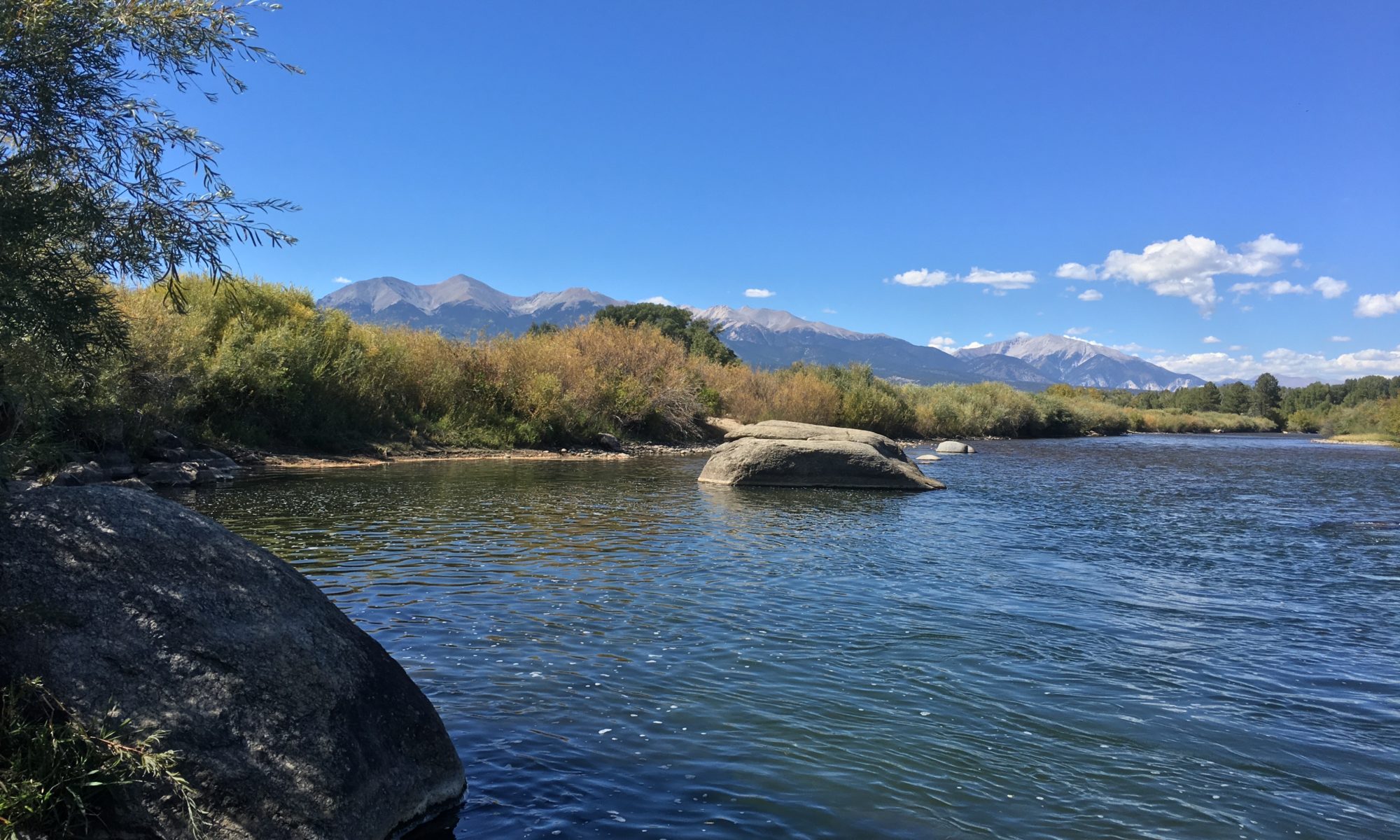
It is a fact that the best days to find fish rising to blue wings are often the best days to stay indoors, close to the hearth. They are those days when a sullen blanket of grey smothers the peaks and a stinging wind drives flurries of snow that swirl and patter amongst the bare willows along the river bank and softly hiss at their demise on the water. They are those days when the river flows grey and metallic through a landscape still barren and brown, branches naked to the breeze, raised skyward like bony supplicants. They are those days where non-fishing spouses look at you with a mix of concern and bemusement that never dims over the years as you announce you are heading out to the river for bit. Truth to tell, they’re probably glad just to get you out of the house.

There is something noble and tragic about the mayfly, a brief flowering of beauty then demise that in the big scheme of things is not too far removed from that of our own mortal coil. Despite the forces of nature arrayed against them, despite being at the mercy of wind and water and silent predation, they follow their script with the single-mined purpose and quiet dignity that uncovers heroism in the everyday. I wonder at times if they are in some way aware of the danger that surrounds them as they bob and pirouette down the river, their sail-like wings fragile and buffeted by the breeze.

The fish, on the other hand, seem to harbor no such thoughts of sympathy or admiration for their plight, gorging themselves on the steady stream of protein that comes to them like hors d’ouvres on a conveyor belt. The challenge for the fisherman on such days is to be able to accurately cast, and then identify, a tiny grey fly on a grey river under grey skies with a swirling wind scuffing the surface this way and that. Perhaps once in five casts you see your fly, the rest of the time you play the zone, setting the hook to any rise that might be near where you think your fly is. Like a slugger swinging at fastballs, most you fan on, but every now and then you connect.

After a couple of hours, it was time to head home. The hatch was still in full swing, the fish still rising, but I’d seen enough. A particularly strong gust of wind almost blew me off my bouldery perch into the river, and I somehow contrived to break my fly off on a back cast. Faced with the choice of retying or heading home, I chose the latter, leaving the river to its business.

Share

Diary Of A Dry Fly Tragic

While there is an element of optimism inherent in any style of recreational fishing, I like to think it is heightened amongst the ranks of dry fly tragics. The dark arts of nymphing may be viewed as an acceptable, at times necessary, method of fooling fish in the long, cold winter months where navel gazing and bouts of introspection come to the fore. But spring is the time for optimists, and in fishing circles, none shines brighter than the dry fly angler.

At least that’s what I told myself driving to the river one recent afternoon, unseasonably warm and typically breezy. My sense of certainty in the goodness of my quest had been heightened earlier in the day, on a family hike with our new pup along a riverside trail. While she charged and cavorted, barking at the strangeness of the water, spooked yet continually drawn to it, I was scanning the far banks, searching the seam lines under the willows. My vigilance was rewarded with the sight of a couple of risers, not a prolific number by any stretch, but enough to convince that at least there existed a few fish who were, like me, looking up.

There’s always a nagging doubt when fishing dry flies on a slow day, as to what might be going on in the river’s depths. Does the lack of feeding activity above the surface mirror that of below, or is there an orgy of feeding of catholic proportions  going on that I’m missing out on due to stubborness and a deluded sense of superiority?

I’ve found it pays not to think about that too much. Instead, I pressed on upriver, and after fifteen minutes caught my first fish, coincidentally aided by the very wind that had made accurate placement of my flies difficult. Drifting the upper reaches of a pour-over, where a side dumper emptied into the main body of the river, an errant gust blew my flies a couple of feet to the left of where I’d intended. Despite thinking the water too slow and shallow to hold a fish at this time of the year, I resisted the urge to pick up and cast again and was rewarded with the nice, aggressive take of a lovely rainbow, charging about under water like my pup on the river bank earlier.

There followed a long drought, drifting my pmx trailing a caddis over the top of some lovely structure – riffles, pockets and eddie lines – but the sense of doubt didn’t return. I’d caught a fish on a dry, teased it from its world briefly to mine, and the rest of the afternoon could pass by fish-less for all I cared. And it nearly did. Late, the sunlight softening and the air calming, I spotted a fish rising in a glassy run against a sheltered, grassy bank. Several changes of flies were required, each smaller than the last, until it finally rose to a sprout baetis, technically a dry fly although some nymph fishermen will tell you 75 percent of it hangs below the surface.

Two hours on the river, two fish landed, beer in the fridge. It was time to head home. I have no idea how many I’d have caught with a nymph – maybe less, maybe more, but since when has counting been the point?

Share

The Dog Days of March

In a way I feel cheated. Cold spring days battling wind, snow and sleet on the river are as much a part of the fishing calendar as the t-shirt weather of August, the glory of fall in the high country or tromping through the snow to nymph January’s noon-to-two window.

I enjoy the cocoon-like feel of wrapping up in fleece and goretex, the knowledge that there is a warm hearth and hot shower at day’s end making the difference between gutsing it out and despair. Such days help connect you to the cycle of birth and rebirth, as you witness the river and its inhabitants awaken from their seasonal slumber.

So I’m not too sure what to make of this spring. There is a surreal quality about floating the Ark in shirtsleeves in March, the fish as active as it were a summer’s day. I guess I would feel more comfortable if there was more snow in the mountains, but it is also a reminder that you take what nature, through the river, gives you. It seems a waste to not enjoy it for what it is on account of what might happen later in the season.

Maybe April will revert to type, and we’ll see the peaks shrouded again, and the blue wings blown into the nooks and crannies along the rocky shore where the fish sit and sip while flurries swirl. Or maybe we’ll continue with the balmy temperatures and the fish feeding like its July. Either way, might as well get out and enjoy, for who knows what tomorrow brings?

Share

Fresh Powder, Dry Flies

I called Kym from Monarch around the middle of the day for a weather report, trying to decide if I should stay where I was, taking face shots of fresh powder in the trees, or head down to the river to fish for the afternoon. “I’d say it would be a good time to fish. It looks like its snowing all around, but down here its overcast and calm. Not too cold either.”

Bless her. While she may occasionally roll her eyes in pity and perplexity at my fishing escapades, she knows good hatch weather when she sees it. Loading my board up in the back of my truck, I headed down the pass, a quick change into waders at home, and off to the river. My mission was to catch a fish on a dry fly. It was March 1, after all, enough of nymphing already.

It seemed like a great day for a midge hatch, so I figured if I wanted to find some surface feeders, I’d need to locate a spot where the water was slow and deep, and sheltered from any wind that might blow a hatch off the water. There’s a place just below town that meets those criteria, and has delivered for me in the past. I’d not been standing on the bank two minutes when I saw the first rise, quickly followed by several others.

So far, so good. The next step was to actually catch one. My experience of fishing such situations is that with all that calm, clear, slow moving water, the fish can be fairly finicky, not to mention spooky. After ten minutes of no action on a parachute gnat, I tied on a small Griffiths gnat behind, using the parachute to sight my flies in the gloom, avoiding using floatant on the Griffiths to get it down in the surface film.

Straight away, the action picked up, and over the next half hour I landed four nice rainbows, and got spanked by several more. By this stage, it was late afternoon, my feet were cold, the clouds were lowering and wisps of snow swirled about. Time to head home to the hearth and contemplate a red letter day – fresh powder in the morning, dry flies in the afternoon.

Share

Robins, Harleys and Fly fishing

Never mind the longer days, warmer temperatures and the return of the robins – the surest harbinger of spring is the sight of Harley Davidsons back out on the highway. That, and me getting a hankering to go fishing again. I don’t mind admitting, I’m a bit of a wimp when it comes to winter fishing. If an angler is defined as a jerk on one end waiting for a jerk on the other, this particular jerk doesn’t enjoy freezing his ass off for the privilege.
The other day however, the sun was shining, the air calm, and I decided it was time to dig out my gear, head down canyon and reintroduce myself to the river. There’s a spot below Badger Creek that I’ve often admired from the raft, but never taken to the time to linger and work it from the shore, and this seemed like a great opportunity. The canyon here is wide, gradient mellow and the riverbed benefits from longer exposure to the sunlight.
Experience having taught me that goretex waders provide as much frictional resistance as a toboggan on a snow-covered bank, I walked until I found a place where I could pick my way down in the footsteps of another, prior angler. Tying on a couple of nymphs, a big stone and a small flashback pheasant tail, I began working my way upstream, fishing the edges of the seams and the drop offs where the river bed changes from rocks to deep, inscrutable green. It’ll require a few more weeks of warmer weather before the fish begin to shake off their mid-winter torpor. Takes tend to be slow and gentle, so I was careful to set slow and gentle to the merest stutter of hesitation of the indicator.
Over the next half hour I was rewarded with four fish on the end of my line, two of which I touched, the others managing to slip the hook with a combination of their sluggish cold-water writhing and my cold-fingered ineptitude All this played out under the watchful eye of a grey jay, alighted atop a pinon on the far bank. He sat and watched my progress up river, before chuckling his amusement and flying off, disappearing into the tangle of willows on the opposite bank, bringing to mind Bede’s analogy of the life of man as that of a flying sparrow, entering in at one door and quickly out another, briefly “out of the wintry storm and into it again.”
I came to a slow pool with a gentle back eddy, the low angling sun sparkling in reflection on the undersides of the over-hanging rocks, a cluster of midges huddled in the sunlight, flitting and skimming and doing whatever it is midges do on a late winter’s afternoon. Three fish finned and hovered on the sandy bottom beneath them, disinterested in the meagre protein on offer on the surface, instead preferring to stay down deeper in the water column, feeding on whatever nymphs the gentle back current brought their way. They tolerated my stonefly and pheasant tail for about three casts, before they were gone, and it was just me and the midges.
Not wishing to stick around for any more cries of derision from the grey jay, I wound up my line and headed back up the embankment to the truck, mission accomplished, another season begun.
Share
