Missed fishing, missed fish….

My record for missing fish stands at nine in a row. Bad enough I know, but I was guiding at the time. It was during the caddis hatch ten or so years ago. A sunny spring day when the caddis were just starting to hatch in earnest, and the fish, not yet sated, were pursuing the bounty with aggressive abandon.

The lady I was guiding, Samantha, was having difficulty getting the timing of her hook set right. The situation wasn’t helped by the speed with which the fish were hitting the flies on the surface. When a caddis hatches, it rises from the bottom of the river, often riding an air bubble to the top, wings fully developed and ready to fly. Breaking through the surface film, it is off, like a rat out of an aquaduct, to quote Brian’s mother.

The fish know this, and know too that if they want to have caddis for dinner, they’d better be quick. Accordingly, you have to adjust your reaction time to the rhythm of the fish. Having missed several takes, in exasperation Samantha turned to me, handing me the rod. “You do it, show me how.”

It was then I went 0 for 9 over the next five minutes. Handing the rod back to her, I shrugged and suggested the river was telling us we needed to break for a beer rather than let the humiliation continue.

This time of the year, the takes tend to be a little more languid. Fish are seeing and feeding on a lot of terrestrials. The conveyor belt passing over their heads carries lots of hoppers, beetles and ants, creatures not meant to be in the water, usually inept and helpless when they are. Fish know they have more time, so leisurely inspect their prey before committing.

In this situation, the challenge lies in not setting the hook too early, thereby pulling the fly out of a still open mouth. You get to watch the fish rise up to inspect the fly, sometimes drifting downstream with it, nudging it, before taking or refusing. The bigger the fish, the more time they tend to take. You need to discipline yourself to wait.

In New Zealand, it’s called the “God Save The Queen” rule. Downunder, until they sense something is wrong with their world, the bigger fish do everything slowly and with deliberation. No calorie of energy is expended unnecessarily. A fish rising to a dry fly will sometimes inspect it for five or ten seconds of more before deciding to take or refuse. I’ve seen them open their mouths around a fly, then drift backwards downriver for several yards, mulling their options, before backing away and returning to their station.

When they do take, it is usually so slow and deliberate that the fisherman, knees shaking in anticipation, must discipline him or herself to wait until the fish is back below the surface, mouth firmly shut, before reacting. Hence the mantra “God Save The Queen” before setting the hook.

All of this is a rather round about way of saying that on the day in question, it took me a little while to get my mojo working. For the first twenty minutes or so, and at regular intervals thereafter, I couldn’t hook a fish to save myself. I’ll put it down to lack of match practice – my other job has kept me from the river for most of this summer, which given the state of the economy over the last few years is a good thing, I guess – and keep telling myself that it just wouldn’t be as much fun if you hooked them all.

Share

Missed Fishing, Missed Fish….

My record for missing fish stands at nine in a row. Bad enough I know, but I was guiding at the time. It was during the caddis hatch ten or so years ago. A sunny spring day when the caddis were just starting to hatch in earnest, and the fish, not yet sated, were pursuing the bounty with aggressive abandon.

The lady I was guiding, Samantha, was having difficulty getting the timing of her hook set right. The situation wasn’t helped by the speed with which the fish were hitting the flies on the surface. When a caddis hatches, it rises from the bottom of the river, often riding an air bubble to the top, wings fully developed and ready to fly. Breaking through the surface film, it is off, like a rat out of an aquaduct, to quote Brian’s mother.

The fish know this, and know too that if they want to have caddis for dinner, they’d better be quick. Accordingly, you have to adjust your reaction time to the rhythm of the fish. Having missed several takes, in exasperation Samantha turned to me, handing me the rod. “You do it, show me how.”

It was then I went 0 for 9 over the next five minutes. Handing the rod back to her, I shrugged and suggested the river was telling us we needed to break for a beer rather than let the humiliation continue.

This time of the year, the takes tend to be a little more languid. Fish are seeing and feeding on a lot of terrestrials. The conveyor belt passing over their heads carries lots of hoppers, beetles and ants, creatures not meant to be in the water, usually inept and helpless when they are. Fish know they have more time, so leisurely inspect their prey before committing.

In this situation, the challenge lies in not setting the hook too early, thereby pulling the fly out of a still open mouth. You get to watch the fish rise up to inspect the fly, sometimes drifting downstream with it, nudging it, before taking or refusing. The bigger the fish, the more time they tend to take. You need to discipline yourself to wait.

In New Zealand, it’s called the “God Save The Queen” rule. Downunder, until they sense something is wrong with their world, the bigger fish do everything slowly and with deliberation. No calorie of energy is expended unnecessarily. A fish rising to a dry fly will sometimes inspect it for five or ten seconds of more before deciding to take or refuse. I’ve seen them open their mouths around a fly, then drift backwards downriver for several yards, mulling their options, before backing away and returning to their station.

When they do take, it is usually so slow and deliberate that the fisherman, knees shaking in anticipation, must discipline him or herself to wait until the fish is back below the surface, mouth firmly shut, before reacting. Hence the mantra “God Save The Queen” before setting the hook.

All of this is a rather round about way of saying that on the day in question, it took me a little while to get my mojo working. For the first twenty minutes or so, and at regular intervals thereafter, I couldn’t hook a fish to save myself. I’ll put it down to lack of match practice – my other job has kept me from the river for most of this summer, which given the state of the economy over the last few years is a good thing, I guess – and keep telling myself that it just wouldn’t be as much fun if you hooked them all.
Share

Fishing With Kids

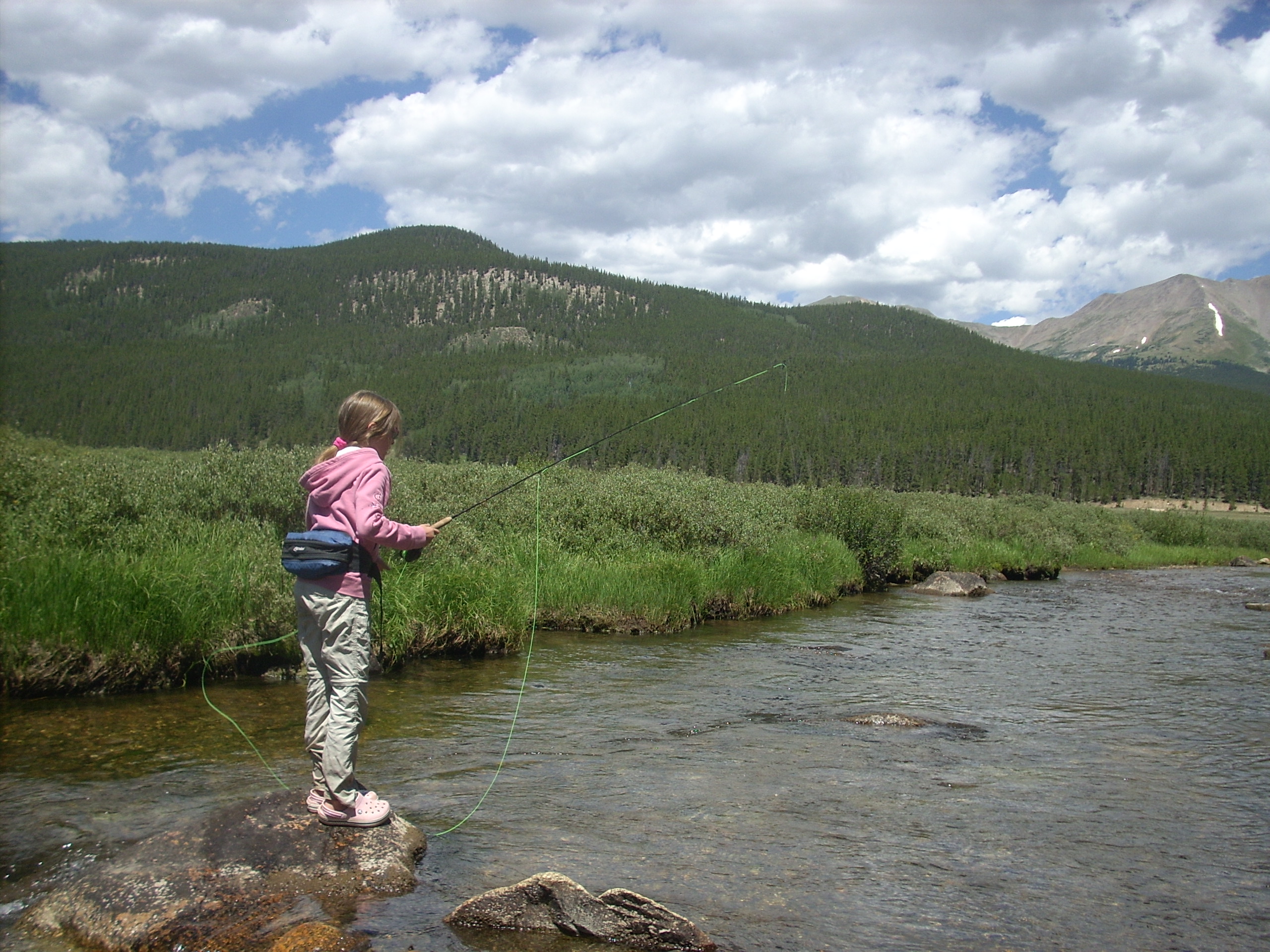
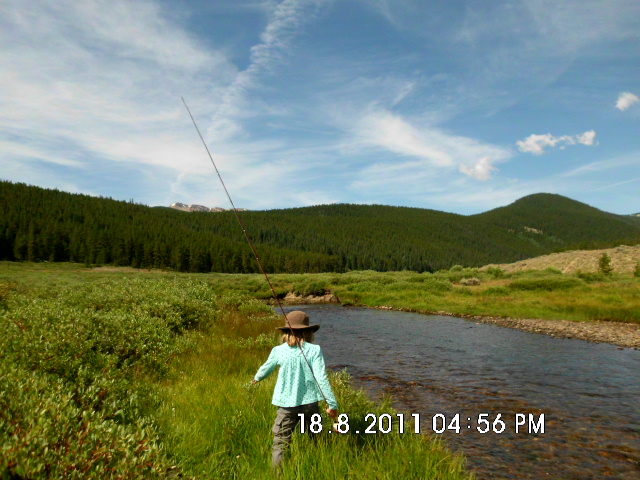
This is a departure from my traditional video posts, brought about in part by a lack of opportunity to fish this summer. This reminisce is part of a longer piece about fishing with kids. The inspiration was a couple of recent camping trips with my daughters, Sophie and Beatrice. Any comments / suggestions appreciated.

The first time we’d been camping with Soph, when she was two, didn’t have the outcome I’d been hoping for. Kym and I fitted out the truck with a big comfy mattress, and we drove up to a mountain lake 20 miles from town, the last five lurching back and forth up a rutted four-wheel drive road. Eating dinner as dusk settled over the mountains, the air was perfectly still, the mirror-like lake reflecting the deepening hues of the evening sky and darkening mountains. Dimples began breaking the surface, intermittently at first, now with greater urgency. The evening rise was coming on, insects hatching from the depths, the fish rising to gorge on the bounty. Nirvana.

I unloaded my one man pontoon boat from roof of the truck, and carried it eagerly to the water’s edge. There would be an hour, perhaps an hour and a half, of the kind of dry fly fishing dreams are made of. No time to waste. I hurriedly strung up my rod, fumbling into my chest pack for a fly box when the first wail split the stillness. I turned, glancing back towards our campsite, to see Kym emerge from the back of the truck, shrugging her shoulders.

Figuring if I ignored the potential problem it might go away, I continued tying on a small elk hair caddis, turning back towards the lake. The risers were now working at least half the lake’s surface, a glutinous display of Caligula-like proportions imminent. The second and third wails came in quick succession. Kym was now holding her, standing at the back of the truck, making an eye contact unmistakable in its intent from 50 yards away. I put down the fly rod and walked toward them. “She doesn’t want to stay here. She doesn’t want to sleep in the truck.” She’d just realized camping didn’t mean eating hotdogs by the lake and then going home.

“Sophie honey, it’ll be fun. We’ll look up at the stars, and you can watch Daddy catch some fish.” The last said in hope rapidly turning to despair. She could be a bear with a sore head if she didn’t get her way. She wailed some more, and I remembered there were a couple of other campers around the lake. It was tough enough having my own sense of serenity broken, let alone being responsible for shattering that of others. I wearily trudged down to retrieve the pontoon boat, the lake now a slow boil of rising fish. Loading up, we headed back down the mountain in the deepening night. She fell asleep almost instantly, but the road was too narrow to turn around. Besides, if she woke up and we were back at the lake, there’d really be hell to pay.

Share

It’s Been Awhile….

The phone rang in the morning. It was Caveman on the other end. “Man, we gotta get out on the river. I just floated it with my kids yesterday, and you should have seen what I saw. We’ve gotta throw some flies.”

I’d checked the flow gauge that morning, and knew that the level had dropped to around 2000 cfs. Still pretty high for float fishing, but after the extended runoff, the river was finally clear, and the fish were bound to be hungry.

“I’d love to, but I’ve gotta work today. Maybe later in the week.” I silently cursed in equal measure the laws of economics, and the Puritans and their damned work ethic.

“What time do you finish? I’ll meet you at Salida East,” came the reply.

I thought for about three seconds: wife and kids out of town, no domestic duties, lawns are mowed, cat has food. “Good idea. See you at four.”

Anglers normally expect to lose the best part of the month of June to high water, but not since 1995, to my recollection, have levels stayed so high for so long. So the sight of the river finally clearing and dropping had me happy as a clam. I threw my gear into the back of the car and headed to the office, hoping that no one would walk in the door at 3:55 wanting to buy a house.

Luck held, and by 4:15 my rod was rigged, I had a cold beer in my hand, and it was time find out how often I could cast close enough to the bank, and how hungry the fish really were. The answers to those questions proved to be: sometimes, and pretty.

The tough part about float fishing at these levels is trying to get a drift of over five seconds duration. The river is moving so fast, and the fish holding so tight to the edges, that often there isn’t even time to mend before the current has taken hold of your line and dragged the fly out from the narrow strip of slow water along the bank. A fast action rod is a real plus, the ability to deliver the fly where you want it quickly really helps.

At least it isn’t rocket science figuring out where the feeding fish are holding. They are riding out the deluge in whatever slack water they can find, hanging on to the willows and brush piles along the bank, mixed in with all the Nalgene bottles, baseball caps and tevas, testament to several weeks of high water rafting carnage upstream. You’ve got to be prepared to cast your fly in there after them, and not be afraid to lose a few in the process.

Trying to slow the boat down isn’t easy either. On the oars, you’ve got to pick your battles, knowing when to put the brakes on for the slower water, and when to let the current take you where and when it wants.

As the river continues to drop, I’d expect the conditions to get easier, and the fishing to get better and better. We caught a decent number of fish, turned a few more, and got spanked by several. All in all a great day, with the prospect of many more on the horizon.

Share

It’s Been A While….

The phone rang in the morning. It was Caveman on the other end. “Man, we gotta get out on the river. I just floated it with my kids yesterday, and you should have seen what I saw. We’ve gotta throw some flies.”

I’d checked the flow gauge that morning, and knew that the level had dropped to around 2000 cfs. Still pretty high for float fishing, but after the extended runoff, the river was finally clear, and the fish were bound to be hungry.

“I’d love to, but I’ve gotta work today. Maybe later in the week.” I silently cursed in equal measure the laws of economics, and the Puritans and their damned work ethic.

“What time do you finish? I’ll meet you at Salida East,” came the reply.

I thought for about three seconds: wife and kids out of town, no domestic duties, lawns are mowed, cat has food. “Good idea. See you at four.”

Anglers normally expect to lose the best part of the month of June to high water, but not since 1995, to my recollection, have levels stayed so high for so long. So the sight of the river finally clearing and dropping had me happy as a clam. I threw my gear into the back of the car and headed to the office, hoping that no one would walk in the door at 3:55 wanting to buy a house.

Luck held, and by 4:15 my rod was rigged, I had a cold beer in my hand, and it was time find out how often I could cast close enough to the bank, and how hungry the fish really were. The answers to those questions proved to be: sometimes, and pretty.

The tough part about float fishing at these levels is trying to get a drift of over five seconds duration. The river is moving so fast, and the fish holding so tight to the edges, that often there isn’t even time to mend before the current has taken hold of your line and dragged the fly out from the narrow strip of slow water along the bank. A fast action rod is a real plus, the ability to deliver the fly where you want it quickly really helps.

At least it isn’t rocket science figuring out where the feeding fish are holding. They are riding out the deluge in whatever slack water they can find, hanging on to the willows and brush piles along the bank, mixed in with all the Nalgene bottles, baseball caps and tevas, testament to several weeks of high water rafting carnage upstream. You’ve got to be prepared to cast your fly in there after them, and not be afraid to lose a few in the process.

Trying to slow the boat down isn’t easy either. On the oars, you’ve got to pick your battles, knowing when to put the brakes on for the slower water, and when to let the current take you where and when it wants.

As the river continues to drop, I’d expect the conditions to get easier, and the fishing to get better and better. We caught a decent number of fish, turned a few more, and got spanked by several. All in all a great day, with the prospect of many more on the horizon.

Share