Who Ate All The Caddis???

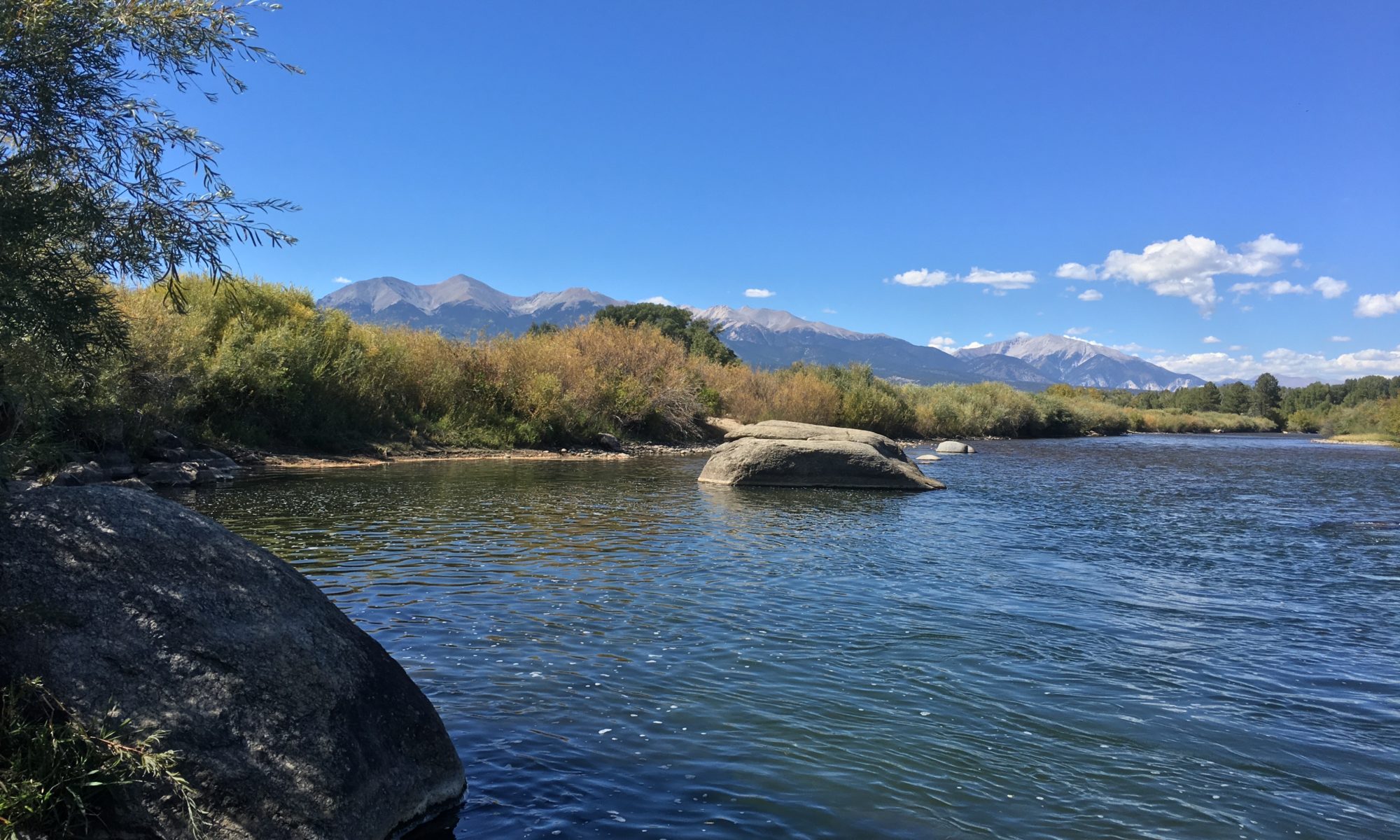
It’s been a funny old spring for an angler on the Arkansas. The usual rules of engagement haven’t been observed. What, you may enquire, are the usual rules? Well, they’re the ones where around the beginning of April the weather starts to warm consistently. River levels remain low and constant. The increased sunlight warms the water and the riverbed itself. Once the water temperature reaches around 54 degrees, millions of little bugs called caddis flies hatch. These caddis are feasted on by fish and fowl, and indirectly by fishermen, who descend on the river in equally impressive numbers to catch the fish that are catching the caddis.

But this time around, someone rewrote the script. The weather patterns have been all over the place – one day warm and in the 70s, the next snowy and 30. The river level has been rising steadily, making it harder for the suns rays to do their thing. Consequently, over the past month, scarcely a caddis had been seen. Which begs the question – where are the little buggers?

I’ve been on the river most days this past month, and have seen one day when there were caddis hatching in decent numbers, and fish feeding on them. Here we go, I thought, even proudly posting on Facebook that the hatch was underway. Since then, barely a thing. The odd caddis skittering about in the wind, the odd fish munching on one. In years gone by, they have hatched in incredible numbers, millions rising from the surface of the river like snow flakes in reverse. There is little you can do in such situations but pull the boat over to the side of the river and marvel at nature’s bounty and intricacy.

All this is not to say that the fishing, per se, has been lousy. Quite the contrary. The odd day excepted, the fishing has been consistently good. If your aim was to catch a fish on a dry fly, however, you may be disappointed. Which is your problem, and yours alone. Its a reminder that ultimately, each day we take what the river gives us.

But I still would like to know: what has happened to the caddis? Are they going to hatch later? Were last years males all firing blanks? Have they been taken up in some kind of heavenly insect rapture? Even the swallows seem to be in on the act. Usually, this time of the year, their nests under bridges are teaming with life and new hatchlings. So far, they have been strangely empty, as if they know something we don’t.

So from now on, when people ask me what’s going on, after this spring, I’m just going to shrug. Don’t ask me, I’m only a human.


Share

Messing About In Boats

“There is nothing – absolutely nothing – half so much worth doing as simply messing around in boats.”

Thus said Rat, in the process opening a whole new world of possibilities to the the workaholic Mole. The fact that there was no point to the day, no destination or purpose, was the point.

So it should be. While we might hit the river with various excuses to justify it – friends in town, unexpected day off, need to try out the new fly rod, find out what the fish are up to for my guide trip tomorrow – the reality is that we really, or should be, doing it for the intangibles it provides.

The other day, boat parked out of a cold rain under a bridge, we sat for a couple of minutes and watched. A dipper moved in and out of the rocks along the shore bank searching for food, then filled the air with song more melodious than seemed possible to emanate from such a small creature. To whom or what she was singing was left unknown, but the gift of the song still richly reverberates.

On a recent float trip, I rowed the boat to the side of the river, seeking respite in the lee of a cliff from the constant wind, pushing us unwillingly downstream. At such times you are thankful for small mercies, namely that it was not, at least, blowing upstream. Mayflies had been hatching all afternoon, but getting blown off the water, their upright wings serving as unwitting spinnakers. In the lee, there was some shelter, and we watched as they bobbed and pirouetted down the eddy lines, running the gamut of the fish eagerly rising to them where they could.

The fish themselves were holding a couple of feet below the surface, unconcerned at our presence some twenty feet away, rising unhurried and fluid to the mayflies as they drifted. Do the mayflies sense the danger, I wondered, or do they float on, unaware of the predators watching, and the randomness of their circumstance?

It’s probably not a good thing for a guide to respond with “Who cares?” when asked “How’s the fishing?” But reality is that the fishing is always good. It’s only ever the catching that varies, and as Rat so succinctly observed:

“Nothing seems really to matter, that’s the charm of it. Whether you get away, or whether you don’t; whether you arrive at your destination or whether you reach somewhere else, or whether you never get anywhere at all, you’re always busy, and you never do anything in particular.”

Share

It’s Blue-Wing time on the Arkansas

Coming up in a few weeks, the Ark will be in the midst of one of the most renowned dry fly hatches in the West – the Mother’s Day caddis hatch. But right now there is another, less spectacular, but no less enjoyable hatch going on – the early spring blue-winged olive hatch.

Blue-wings are mayflies, and make up the second most important part of an Arkansas River trout’s diet, after caddis. Up close, blue-wings are a beautiful insect, delicate and short-lived. While some species may live for up to a year subsurface as nymphs, once they hatch into adults, the clock is ticking. The adult has no mouth parts with which to eat and sustain itself, so their life span in usually little more than twenty four hours. As you might imagine, they are on a mission.

That mission is to find a mate, do the business and lay eggs back in the river for the next generation before departing this mortal coil. There is no time for drawn out courtship rituals here – think spring break at Cancun or Ibiza.

Generally, blue-wings prefer to hatch on cooler, cloudy days. Once breaking through the surface film, they have to wait anywhere from thirty seconds to a few minutes while their wings inflate and dry out. It is at this time that they are most vulnerable, and as they hatch and float helplessly down the river, trout will line up along the foam lines and eddy lines to languidly sip them down.

Lately, we haven’t been having enough cooler, cloudy days, but they have been hatching anyway – when you’ve gotta go, you’ve gotta go, I guess. On this day that Caveman, Pinky and I floated, we had what you would call a typical blue wing kind of day. In the morning, small nymphs were working best, like pheasant tails and juju baetis. Once the adult blue-wings started to appear on the surface, we switched to dry flies and had a great couple of hours of top water action.

I’d also like to add that anyone can catch a trout on this river. It takes real skill and technique, however, to hook a sucker fish, let alone hook it in the tail. That’s my story, and I’m sticking to it.

Share

It’s Blue-Wing time on the Arkansas

Coming up in a few weeks, the Ark will be in the midst of one of the most renowned dry fly hatches in the West – the Mother’s Day caddis hatch. But right now there is another, less spectacular, but no less enjoyable hatch going on – the early spring blue-winged olive hatch.

Blue-wings are mayflies, and make up the second most important part of an Arkansas River trout’s diet, after caddis. Up close, blue-wings are a beautiful insect, delicate and short-lived. While some species may live for up to a year subsurface as nymphs, once they hatch into adults, the clock is ticking. The adult has no mouth parts with which to eat and sustain itself, so their life span in usually little more than twenty four hours. As you might imagine, they are on a mission.

That mission is to find a mate, do the business and lay eggs back in the river for the next generation before departing this mortal coil. There is no time for drawn out courtship rituals here – think spring break at Cancun or Ibiza.

Generally, blue-wings prefer to hatch on cooler, cloudy days. Once breaking through the surface film, they have to wait anywhere from thirty seconds to a few minutes while their wings inflate and dry out. It is at this time that they are most vulnerable, and as they hatch and float helplessly down the river, trout will line up along the foam lines and eddy lines to languidly sip them down.

Lately, we haven’t been having enough cooler, cloudy days, but they have been hatching anyway – when you’ve gotta go, you’ve gotta go, I guess. On this day that Caveman, Pinky and I floated, we had what you would call a typical blue wing kind of day. In the morning, small nymphs were working best, like pheasant tails and juju baetis. Once the adult blue-wings started to appear on the surface, we switched to dry flies and had a great couple of hours of top water action.

I’d also like to add that anyone can catch a trout on this river. It takes real skill and technique, however, to hook a sucker fish, let alone hook it in the tail. That’s my story, and I’m sticking to it.

Share

Maui: How Bad Can It Be?

“It seems like an exercise in futility to me” said my wife, shrugging her shoulders. Not wishing to dwell too deeply on her observation, I took refuge in the fact that not everyone gets fishing.

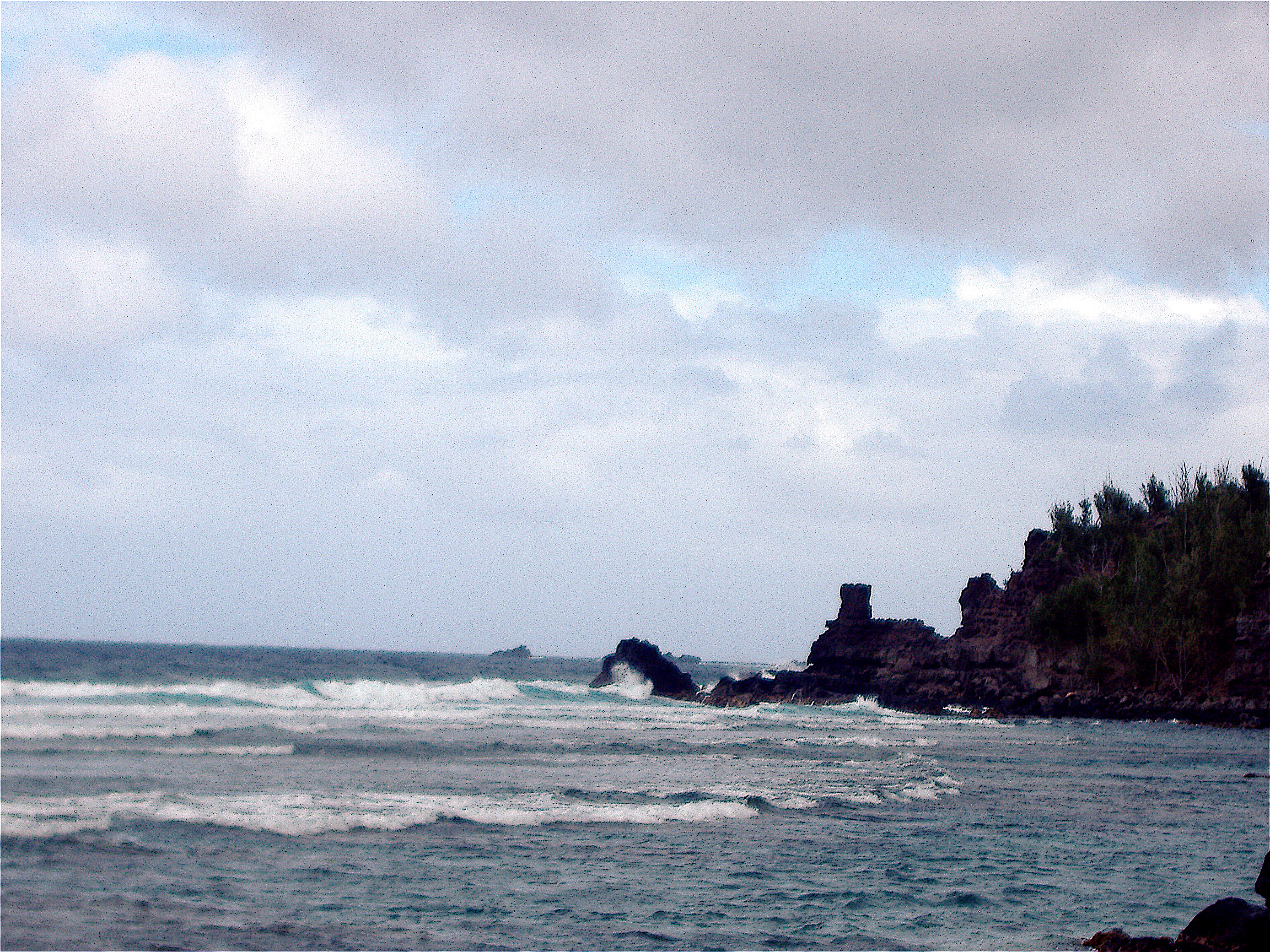
On the surface, it was hard to argue with her. The wind was blowing steadily onshore, 15 to 20 knots, gusting to 40, or so said the weather forecast. A group of surfers were huddled in the questionable shelter of some trees along the beachfront, staring forlornly at the messy shore break. The ocean beyond was an iron grey,  a belt of approaching showers blurring the line between sea and sky.

If I wasn’t going to catch any fish, however, the elements were the last thing I could blame. Ignorance headed that list. We’d been in Maui a little over a week, and in that time the weather had been unseasonable windy and wet. I’d been putting off going fishing for several days, waiting for favorable tides and conditions, but had finally decided to strap on my man pants and get out there.

The Hawaiian Islands in general, and Maui in particular, are not regarded as prime salt water fly fishing destinations. The land rises steeply out of the sea, meaning very little in the way of flats for wading, and in many places the rocks sharp, the remnants of ongoing volcanic activity. Speaking to a couple of locals on a previous trip, I’d learned that this time of the year isn’t the best time for finding fish in close to the shore anyway.

I had a nine weight with a sink tip, a handful of clousers and a fresh spool of 20 pound test. I turned to my wife as I got out of the car and replied “I know, but how bad can it be?” In my youth I’d hiked shorelines very similar, armed with a hand line or surfcaster, some heavy weights and a packet of frozen pilchards for bait. Back then, I was fishing for snapper, gurnard and rock cod, bottom feeders mostly.

Here, it was a whole new ball game. The reefs abounded with strange fish of every color combination imaginable, ranging in size from smaller than my clousers to a pound or so. But it was the fish that fed on these guys that I was hoping would be around. It felt good to be in the water, wading out to rock outcrops, leaping from boulder to boulder, timing my movements with the ebb and flow of the waves.

The dark clouser didn’t do much, but after a while I switched to a neon green, easier to see in the overcast, and I started to get a few chasers – nothing huge, and I couldn’t figure out if they were interested or just saying “wtf is that?” The hundred yards or so between the surf break and the shore was a labyrinth of reefs and channels, the water surging and draining, the fish riding the waves in and retreating with the outflow.

Alas, despite the chasers, I couldn’t get a fish to hook up to help counter my wife’s skepticism. An exercise in futility it was, if putting dinner on the table had been the objective. But for a Kiwi boy land-locked in the Rockies, it was great to taste the salt air and experience its sting on my skin, to feel the surge of the ocean against my legs and stand and stare back across the limitless ocean towards home.

So, no photos of fish to share, no tales of Ahab and Leviathan, but how about that sunset? Taken from the deck of our holiday home, through a mai tai infused lense. As I said before, “How bad can it be?”

Share